The Hands of the House
Heritage
"Our garments are not made—they are narrated. Each embroidery panel is a map of a thousand needles."
At House of Nurtaj, our garments are not "made"—they are narrated.
Our Heritage Archive is built around the centuries-old tradition of Nokshi Katha. Originally a way for women in rural Bengal to tell stories through recycled textiles and rhythmic stitches, we have elevated this folk art into the modern wardrobe.
Each embroidery panel is a map of a thousand needles. Our artisans spend weeks on a single piece, transforming lightweight fabrics into wearable archives of heritage. When you wear a Nurtaj piece, you aren't just wearing a kaftan; you are carrying a conversation between the past and your present.
The Three Pillars of Our Craft
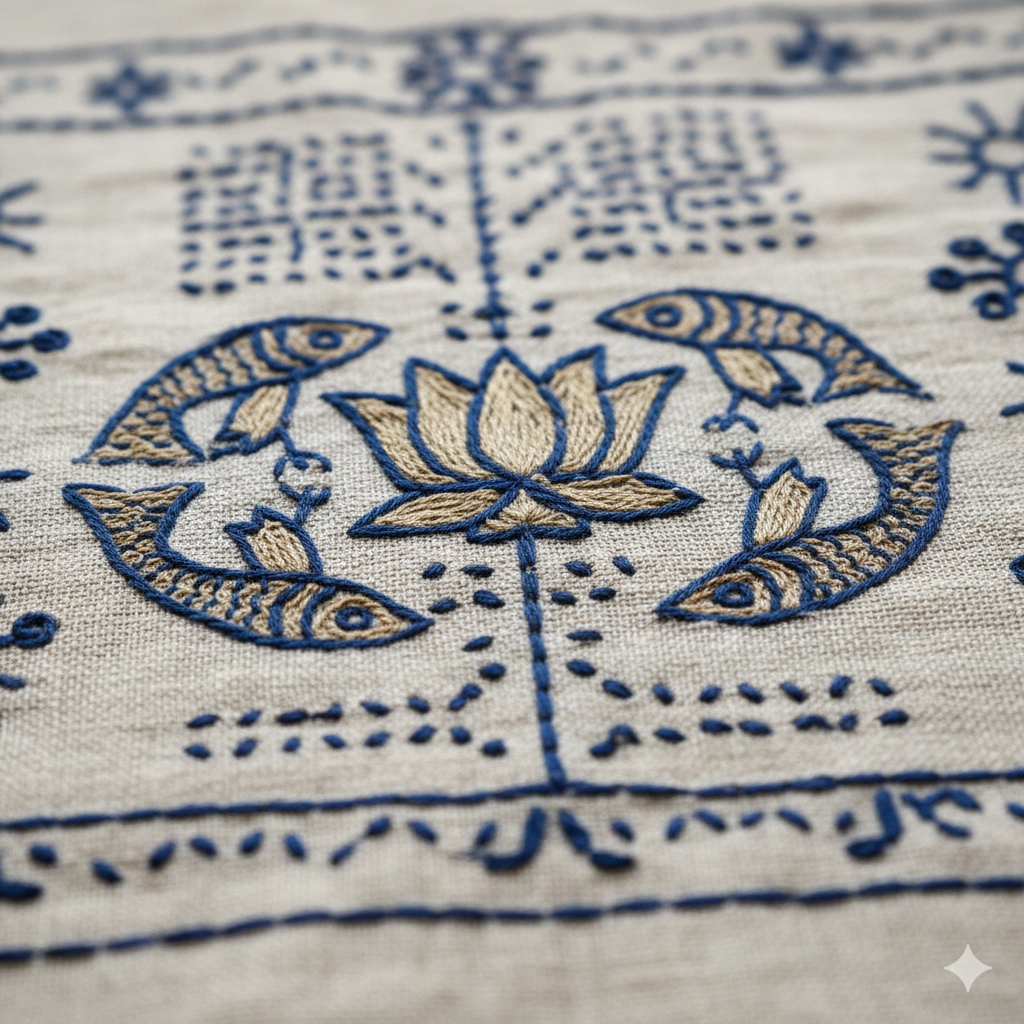
The Stitch — Katha
We use the traditional "running stitch" to create texture and soul that a machine could never replicate. Each stitch is deliberate. Each line is rhythmic. The work is meditative, requiring focus that spans days, sometimes weeks.
The Story — Noksha
Our patterns are inspired by nature and geometry—symbols of luck, protection, and the flowing river. The designs are not random decoration. They are visual language, carrying meaning passed down through generations of women who stitched by lamplight.
The Sustainability
By supporting traditional artisans through direct NGO partnerships, we ensure this craft lives for another generation. Every piece you acquire creates fair-wage livelihoods for the women who preserve this heritage. This is not charity. This is partnership.
The Women Behind the Work
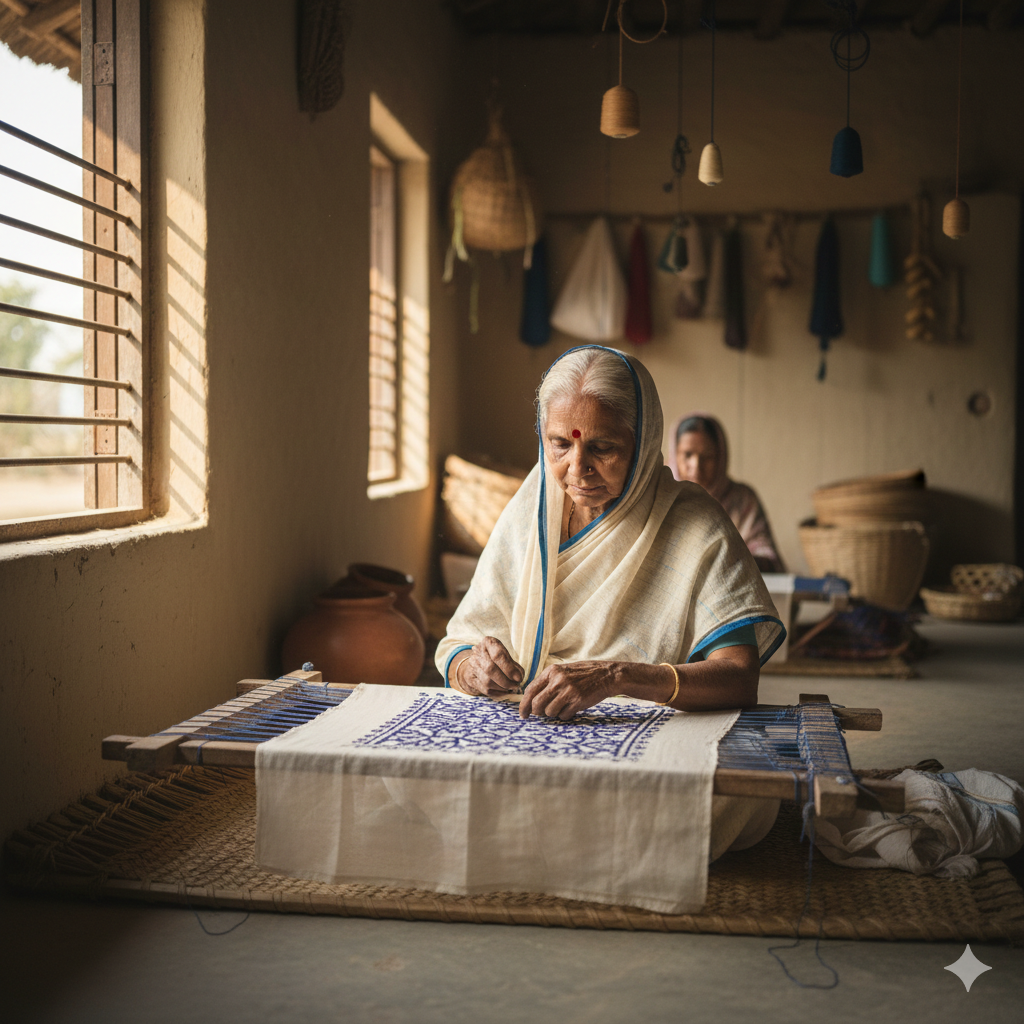
Our artisan cooperatives are based in rural Bengal, where Nokshi Katha has been practiced for centuries. These are not anonymous factories. These are named women—mothers, daughters, grandmothers—whose hands carry knowledge that cannot be taught in schools.
Each artisan who works on a Heritage Archive piece signs her work. Not literally on the garment, but in our records. We know who stitched which panel. We know how long it took. We know her story.
When you purchase a Nurtaj piece, you become part of that story. The certificate of authenticity that accompanies your garment includes the name of the primary artisan and the cooperative she belongs to. This is transparency. This is dignity.
"Fifteen thousand stitches.
One story.
Weeks of focused work."
— The Heritage Archive
From Thread to Treasure
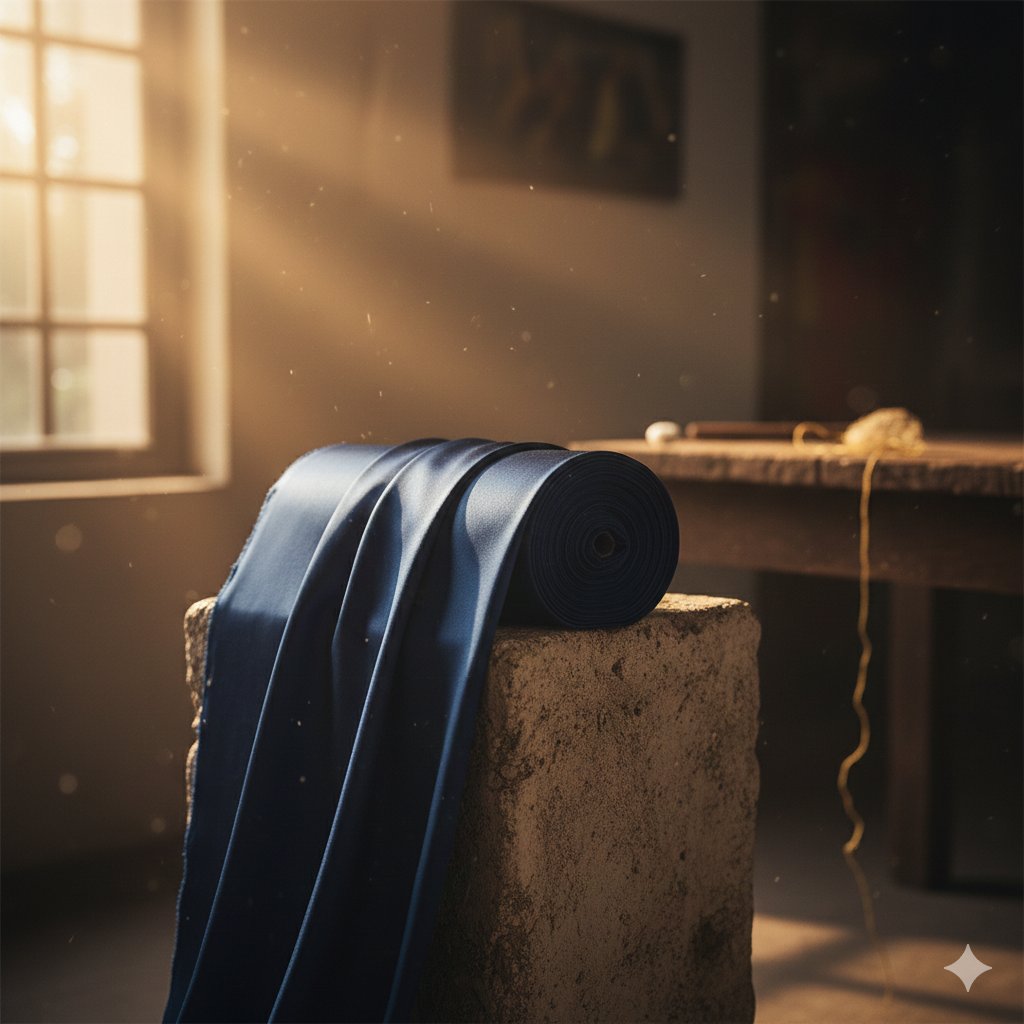
Each Heritage Archive piece begins with base fabric—premium linen-cotton blends sourced from traditional mills. The fabric is cut to the kaftan silhouette and prepared for embroidery.
The Nokshi Katha panel is then hand-stitched directly onto the garment's spine. This is not appliqué. The embroidery becomes part of the fabric's structure, creating dimensional texture that shifts with movement and light.
The running stitch creates subtle ridges across the surface—you can feel it with your fingertips. This tactile quality is what separates handwork from machine work. It is presence. It is proof.
Once the embroidery is complete, the garment travels from Bangladesh to Canada for final finishing—French seams, quality control, and the addition of the signature element that marks every Nurtaj piece.
Why This Matters Now
For too long, fashion has moved too fast, leaving heritage in its wake.
Nokshi Katha was once a household skill in Bengal. Grandmothers taught daughters. Daughters taught granddaughters. But the speed of modern life—and the flood of cheap, machine-made textiles—has eroded this knowledge.
Fewer young women are learning the craft. Fewer families depend on it for income. The techniques risk becoming museum pieces—admired but not practiced.
House of Nurtaj was born to reverse this. Not through charity, but through commerce. By creating contemporary luxury pieces that honor traditional craft, we create economic incentive for artisans to continue their work. We create value where value was disappearing.
This is how heritage survives. Not by preserving it in glass cases, but by weaving it into living wardrobes.
Where We Work
Our primary artisan cooperatives are located in the rural districts surrounding Dhaka, Bangladesh—regions where Nokshi Katha has been practiced for centuries.
The embroidery work happens in homes and community centers, where artisans can work on their own schedules, balancing craft with family responsibilities. This flexibility is essential. These are not factory workers. These are independent artisans who choose their hours and their pace.
Once pieces are complete in Bangladesh, they are shipped to our finishing studio in Canada, where final quality checks, seam finishing, and packaging occur. This dual-location model allows us to honor the craft at its source while maintaining quality standards for the international market.